How Do You Choose a Career When You Don't Know What's Out There?
You can't aspire to a career you don't know exists. Before we ask young people what they want to become, we need to show them what's out there, and help them build the skills to navigate a world of work that keeps changing.
nmomanyi · · 3 min read
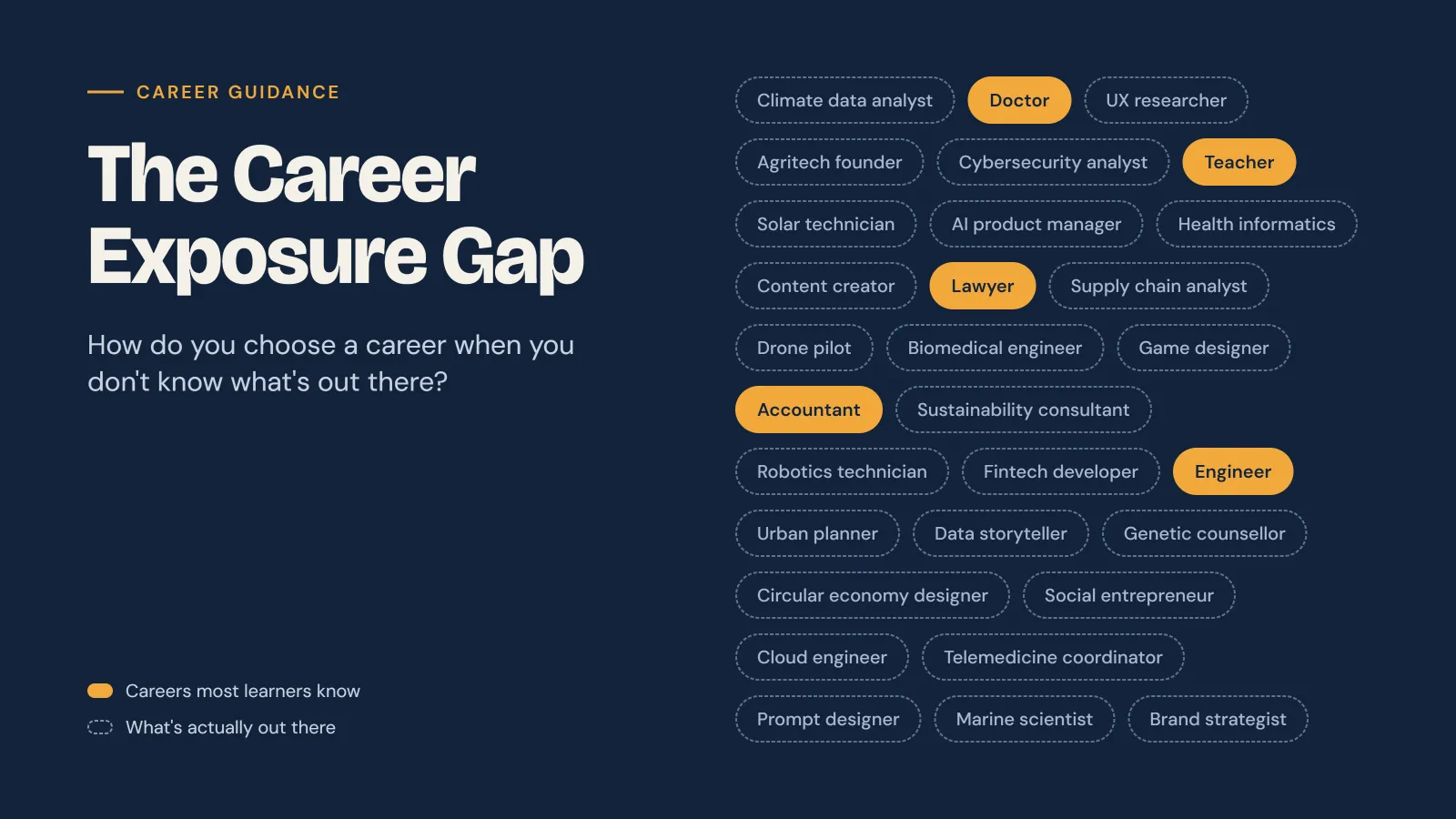
The Career Exposure Gap: How Do You Choose a Career When You Don't Know What's Out There?
A learner can only make a career decision based on the careers, industries and possibilities they know exist. Yet the world of work is changing quickly. Technology is creating new roles, existing jobs are being redesigned, and skills are becoming increasingly transferable across industries.
That makes early career exposure important, not because a Grade 7 or Grade 9 learner needs to choose a career early, but because they need enough exposure to explore before they decide.
Here are five ways to help young people close the career exposure gap.
1. Start with exposure, not a career decision
Before asking "What do you want to become?", help learners discover what is actually out there.
Expose them to different industries, professions, workplaces, entrepreneurs and emerging careers. Let them meet people doing the work and understand what those careers actually involve.
Key idea: You can't aspire to what you don't know exists.
2. Understand where the world of work is heading
Career exploration shouldn't only focus on today's most familiar professions.
Learners should be encouraged to understand trends such as AI and automation, digitalisation, climate and sustainability, healthcare innovation, cybersecurity, data, the creator economy and new forms of entrepreneurship.
The question isn't simply:
"What jobs are available today?"
It is also:
"What skills and problems will organisations need people to solve tomorrow?"
3. Look for the intersection of interests, strengths and opportunity
A career shouldn't be chosen based on passion alone or salary alone.
Learners can consider three dimensions:
- What interests me? What subjects, problems or activities naturally hold my attention?
- What am I good at, or willing to become good at? What strengths and skills do I already have, and which ones can I develop?
- Where is there opportunity? Which industries and roles are growing or evolving, and what skills are employers looking for?
The intersection gives a learner a much richer basis for exploration.
4. Try careers before committing to them
Career exploration becomes much more meaningful when learners can experience careers rather than simply research them.
That could include:
- Job shadowing
- Mentorship
- Internships or holiday experiences
- Career talks
- Informational interviews
- Building small projects
- Volunteering
- Entrepreneurship challenges
A learner might discover that the career they imagined isn't actually for them, and that's useful information.
Experimentation turns career choice from a guess into an informed decision.
5. Build skills that keep options open
Perhaps the most important shift is helping young people understand that their education isn't only preparing them for one job title.
Skills such as communication, problem-solving, collaboration, digital literacy, adaptability, critical thinking and learning how to use AI effectively can travel across careers.
Instead of asking:
"Which career will still exist when I'm 30?"
we can help young people ask:
"What capabilities can I build that will help me navigate whatever the world of work looks like?"
Choosing the next step well
A young person doesn't need to have their career figured out at 14, 16 or even 18. But they do need opportunities to explore.
The role of career guidance should therefore be bigger than helping a learner select a university course. It should help them understand themselves, discover the world of work, encounter possibilities they may never have known existed, and develop the skills to make informed decisions as that world continues to change.
The goal isn't to help young people choose their entire future. It's to give them enough exposure and agency to choose their next step well.
Want your child to see more of what's out there?
Quest is coming soon to help learners explore careers, discover their strengths and try out possibilities before they commit. Sign up and we'll let you know the moment it launches.